
Where to Buy Property in Costa Rica: Best Areas for Beach investment
Buying in Costa Rica is mostly an area decision. The same budget can buy very different lifestyles depending on access, services, and how close you want to be to the ocean. This guide focuses on coastal zones that suit a surf routine and beach day-to-day life.
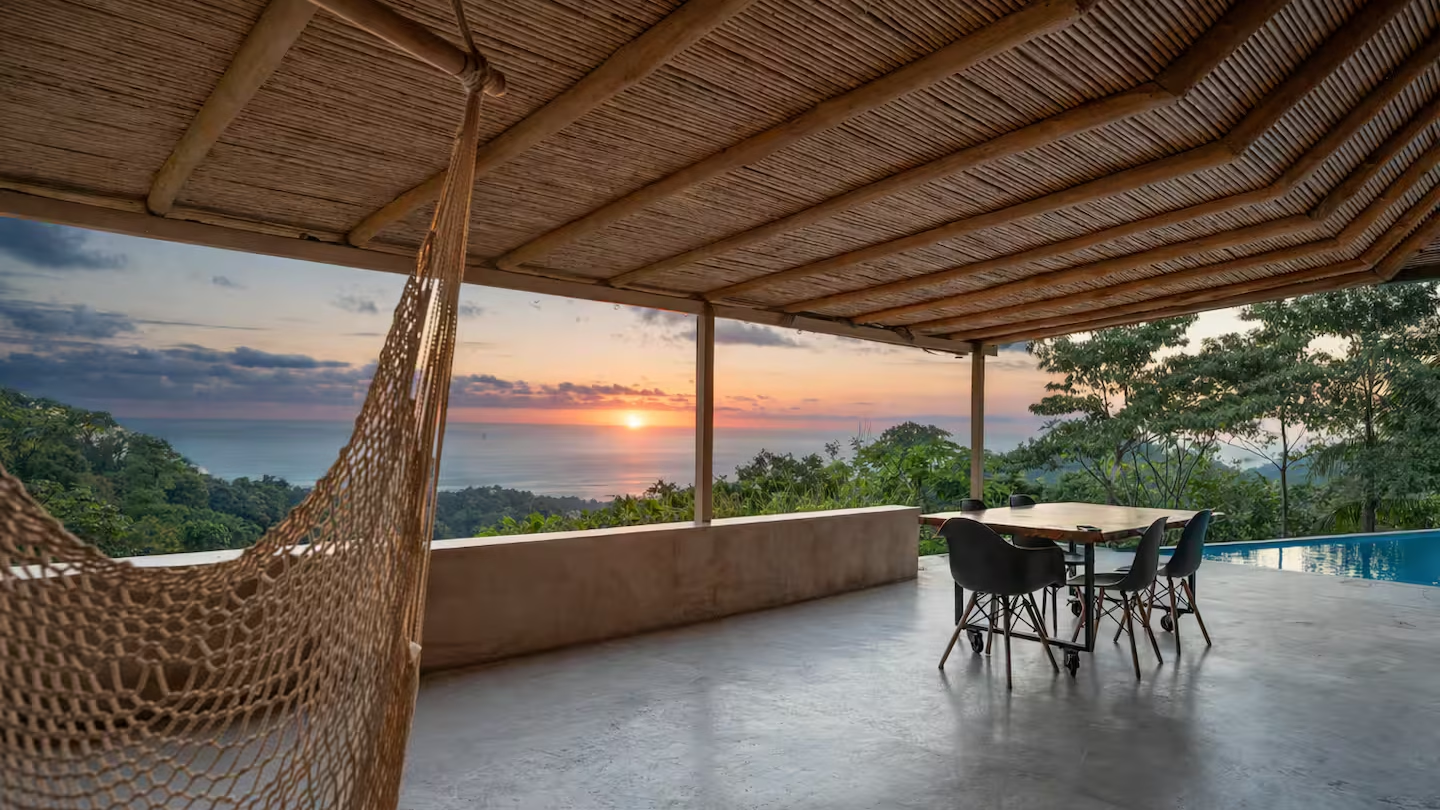
Start with your priorities: what “best area” means in Costa Rica
There is no single best place to buy in Costa Rica. The right area depends on how you want to live, what you can spend, and how much convenience you need. It also depends on whether you will be on the ground full-time or managing things from abroad.
Your use case changes the right location
If this is a primary home, you will care about reliable internet, groceries, healthcare access, and road conditions in the rainy season. If this is a vacation home, you may accept more friction as long as the setting is right. If you plan to rent, you need to think about turnover, maintenance, and who can handle issues when you are not there. If resale is a priority, you will usually want areas with steady demand and clear access.
The four filters that matter most on the coast
Access. Drive time is not just distance. Road type, river crossings, and traffic can change the real commute.
Services. Some beach towns have banks, clinics, and hardware stores nearby. Others require regular trips for basics.
Seasonality. Prices and demand shift fast between high and low season. Weather also affects work routines and property upkeep.
Micro-location. Two properties in the same town can behave differently. Hills, flood zones, beach access, and noise levels can change comfort and long-term value.
Quick map of Costa Rica’s main buying zones
Most buyers end up choosing between three broad zones. The Pacific coast has the largest concentration of beach towns, surf breaks, and real estate activity. The Caribbean coast has a smaller market and a different pace. The Central Valley, around San José, sits inland with the strongest concentration of services and infrastructure.
Pacific coast vs Caribbean coast: what changes for buyers
The Pacific is more developed in many areas. It has more established surf towns, more housing inventory, and more variety in property types. Road access can still be slow, but many Pacific hubs connect more directly to major airports. Rental demand is often tied to high season, surf conditions, and holiday travel.
The Caribbean feels different. The market is smaller and more local in character. Some areas have fewer services nearby and fewer comparable sales to benchmark pricing. Weather patterns also differ, which can affect how you use the property and when renters show up.
Central Valley (San José area): why it still matters
The Central Valley is where many people buy for practicality. It offers the widest range of schools, hospitals, offices, and everyday services. Roads and logistics are usually more predictable year-round. Some buyers start inland to reduce friction, then spend weekends at the beach. Others prefer to live near services and drive to surf rather than deal with coastal constraints full-time.
Best beach areas to buy property on the Pacific coast
The Pacific coast is where most surf-focused buyers start. You will find the widest mix of beach towns, property types, and rental demand. Conditions still vary sharply by region. Access, services, and the feel of each town can change within a short drive. Use the profiles below to match a place to your routine, not to a postcard image.

Nicoya Peninsula: Santa Teresa, Nosara, Tamarindo and nearby towns
Nicoya is one of the most searched coastal areas for buyers. It mixes established surf destinations with fast-changing real estate pockets. The trade-offs are usually between convenience and character. Some towns feel remote but rewarding. Others are easier to live in day-to-day, but busier and more built out.
Santa Teresa and Mal País
Santa Teresa attracts buyers who want a surf-first lifestyle. Most daily life revolves around the main road and the beach access points. Micro-location matters more than people expect. A home on a steep hill can add time, cost, and maintenance, even if it is only a few minutes away in distance.
Seasonality is also a real factor. High season can bring traffic and noise near the busiest stretches. Rainy months can make some roads harder and increase humidity-related upkeep. If you buy here, plan for property management and practical access, not just proximity to the break.
Nosara and Guiones
Nosara is a strong fit for people who value a structured community and a steady wellness scene. Guiones is the best-known beach area, but it is not the only micro-zone buyers consider. Rules around development and land use can affect what is possible on a lot.
Costs can be higher for both construction and ongoing maintenance. Services are improving, but you still need to think about deliveries, repairs, and who will handle issues when you are away. Nosara tends to work best when you want a beach town, but also want routines that feel organized.
Tamarindo, Langosta, Playa Grande
Tamarindo is one of the most convenient beach towns on the Pacific. It has a wide range of services and a large year-round community. That convenience comes with a busier feel. Traffic and density can be part of daily life, especially around peak travel periods.
Langosta and Playa Grande are often considered by buyers who want to stay close to the hub without living in the center of it. The trade-off is that “close” still depends on road access and where you need to go daily. If you plan to rent, think about the kind of guest you want and whether they will prefer walkability or quiet.
Central Pacific: Jacó, Hermosa, Herradura and the “weekend market”
The Central Pacific is shaped by its proximity to San José. Many buyers choose it because it is one of the easiest beach regions to reach from the capital. That also means demand can spike around weekends and holidays.
Jacó has the most services and the most activity. It can suit buyers who want convenience, restaurants, and an easier base for short stays. Playa Hermosa nearby is better known for surf culture, but it is smaller and more focused. Herradura tends to attract buyers looking for a more residential feel or marina access.
In this region, road noise, building density, and micro-location can change the experience quickly. A property that feels quiet on a weekday can feel different on a long weekend.
Southern Pacific: Dominical, Uvita, Ojochal and the Southern Zone
The Southern Zone appeals to buyers who want more space and a slower pace. The landscape is dramatic, and the area is popular with people who prioritize nature and longer stays. The key constraint is distance. Airport access, healthcare options, and specialized services can require more planning than in the north.
Dominical is a smaller surf town with a clear beach focus. Uvita is more spread out and has a wider mix of neighborhoods and services. Ojochal often draws buyers who want a quieter residential setting.
Here, it is important to evaluate road access in rainy season, proximity to rivers, and how far you are from your real weekly needs. The “right” property is often the one that makes errands and maintenance realistic.
Gulf of Papagayo and North Guanacaste: Flamingo, Potrero, Playas del Coco
North Guanacaste is a common choice for buyers who want easier access from an international airport. Many areas have established infrastructure and a strong second-home market. You will see a wide spread in property types, from condos to larger hillside homes.
Flamingo and Potrero are often associated with beach access and a more residential coastal feel. Playas del Coco functions more like a service hub, with more day-to-day amenities nearby.
The main trade-off in this region is between convenience and price. High-demand pockets can command premium pricing, especially where services, paved access, and beach proximity align. If you are buying for part-time use, consider how easily you can manage the property when you are not in the country.
Best places to buy on the Caribbean side
The Caribbean coast is a different market. It is smaller, less uniform, and often more local in feel. The lifestyle can be a strong draw, but day-to-day logistics are not the same as in many Pacific hubs. If you are choosing between coasts, think about services, road access, and how often you need to travel to larger towns.
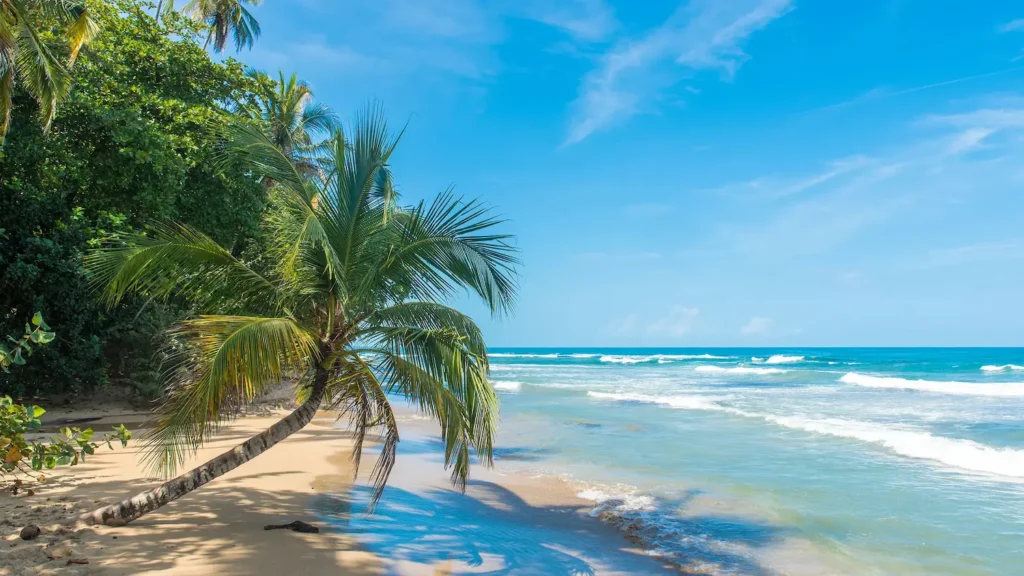
Puerto Viejo and nearby beaches
Puerto Viejo is the main reference point for most buyers looking at the Caribbean. It has a distinct culture and a laid-back rhythm that feels unlike the Pacific surf towns. The area is spread out across several beaches and small neighborhoods. That makes micro-location important for noise, access, and what you can walk to.
Infrastructure can feel lighter than what some buyers expect. Availability of services, repair crews, and certain supplies can vary. Travel time to major urban services is also part of the equation. If you plan to rent, demand often follows a different pattern than the Pacific, with seasonality and guest profiles that can shift.
Who the Caribbean tends to fit best
The Caribbean tends to fit buyers who want a slower pace and do not need constant convenience. It works well if you are comfortable with fewer options for shopping and specialized services. It also helps if you can spend time on the ground before buying, so you understand the rhythm of each neighborhood. If you need predictable logistics and fast access to major services, the Caribbean can feel more challenging.
San José area options when you want services first
Not every buyer wants to live on the coast full-time. Some people prefer stable infrastructure and easy access to daily services. The San José area can make sense if you need schools, hospitals, and professional services nearby. It can also work if you plan to surf on weekends and keep your work routine inland. The trade-off is obvious. You give up being close to the ocean in exchange for predictable logistics.
Escazú and Santa Ana: why buyers choose them
Escazú is often chosen for convenience. You will find more walkable pockets, established shopping areas, and quick access to private healthcare. Housing stock includes condos, gated communities, and single-family homes, with prices that reflect the demand for services and security.
Santa Ana tends to feel more residential and spread out. It has many modern developments and a large choice of newer construction. It also offers easier access to some commuting routes. Buyers often compare the two based on daily rhythm, traffic patterns, and whether they prefer a denser town feel or more space.
When the Central Valley is the smarter first step
The Central Valley can reduce risk if you are moving from abroad. It is easier to set up banking, internet, and utilities when services are close. It is also easier to find contractors and handle repairs quickly. Some buyers start by renting or buying inland, then spend time exploring coastal towns before making a beach purchase.
Quick comparison: which area matches your goals
If you feel stuck between several regions, compare them using the same filters. Focus on real weekly needs. Think about how often you will drive, what you must have nearby, and how much seasonality you can tolerate. The goal is to reduce options to one or two zones before you look at specific properties.
Comparison table
| Area | Access | Service Nearby | Surf Proximity | Seasonality Impact | Best for |
| Nicoya Peninsula surf towns | Can be slower than expected due to roads | Varies a lot by town | Strong in many locations | High season affects traffic and prices | Surf-first lifestyle, vacation use, some rentals |
| Central Pacific | Easier access from San José | Generally strong in main hubs | Good, with specific surf spots nearby | Weekend and holiday spikes | Buyers who want beach access with city proximity |
| Southern Zone | Longer distances between towns | Uneven, improves in larger centers | Good, but more spread out | Rainy season can affect access and upkeep | Space, nature, longer stays, quieter routine |
| North Guanacaste | Often easier airport access | Stronger in established towns | Good in several pockets | Demand can be high in peak months | Second homes, part-time use, easier logistics |
| Caribbean (Puerto Viejo area) | Smaller market, fewer major hubs | More limited in some areas | Different wave and spot exposure | Different rhythm than Pacific | Buyers who accept lower convenience for a distinct lifestyle |
| Central Valley (San José area) | Most predictable year-round | Strongest service access | Requires driving to surf | Less tourism-driven | Families, remote work stability, easier setup from abroad |
What to verify before you buy in a beach area
Coastal properties can look straightforward online. The risk often sits in details that are not obvious in a listing. Access can change between dry and rainy season. Water availability can vary by neighborhood. Permits and zoning can limit what you can build or renovate. Title and boundary clarity matter even more when you are buying from abroad. Treat these checks as basic screening, not as optional extras.
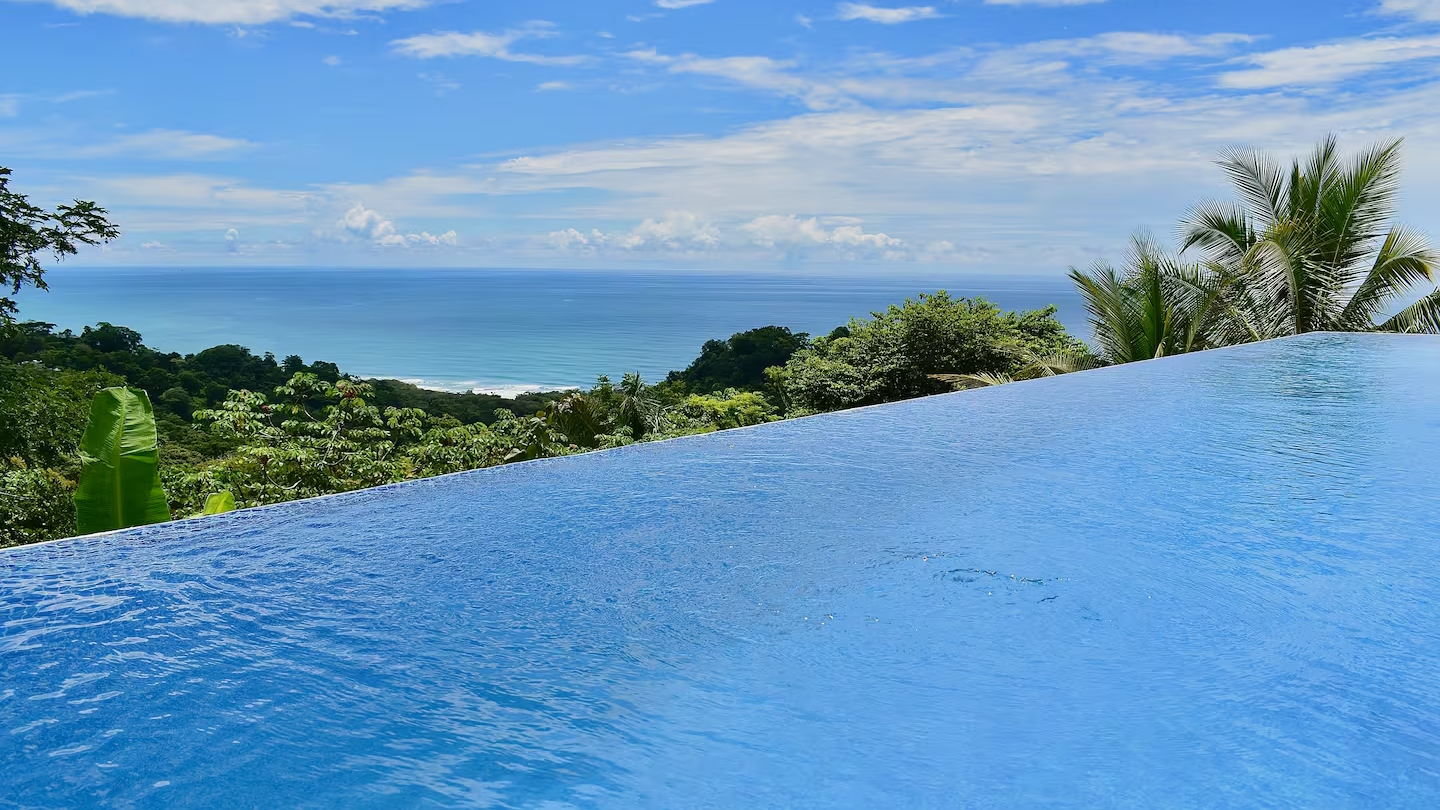
Beachfront and concession land: the key distinction to understand
In Costa Rica, “beachfront” can mean different legal situations. Some properties are fully titled. Others sit in coastal concession zones, where use rights are regulated and conditions can apply. You should confirm the property’s status early, before you assume you can remodel, expand, or rent the way you want.
Ask for the exact cadastral information and a clear explanation of what is being sold. If a listing uses vague wording like “steps from the beach” or “frontline,” verify the legal reality behind it. If the property is close to the shoreline, make sure your attorney reviews the title and any concession documentation with extra care.
Due diligence checklist for remote buyers
- Confirm who owns the property and that the seller has the right to sell.
- Verify boundaries and access. Do not rely on photos or a pin on a map.
- Ask what water source is used and how reliable it is in late dry season.
- Check electricity, internet options, and whether the connection is already in place.
- Confirm zoning and permits for any planned construction or major renovation.
- Request a recent survey if boundaries are unclear or if the lot is irregular.
- Use an independent attorney to review title, liens, and any recorded restrictions.
- Do not send deposits to personal accounts without verified documentation and a clear escrow process.
- If you cannot visit, pay for a local inspection and a walkthrough video focused on access, noise, and drainage.
FAQ: where to buy a house in Costa Rica
Where do foreigners usually buy property in Costa Rica?
Foreign buyers often focus on areas with established services and strong demand. On the coast, that usually means well-known Pacific towns with reliable access and an active real estate market. Inland, the most common picks are Central Valley areas that offer schools, healthcare, and easier year-round logistics.
What is the easiest beach area to live without a car?
Look for towns where daily needs sit close together. Prioritize walkable pockets with grocery options, clinics, and a stable road network. Even in popular beach towns, “car-free” depends on micro-location, hills, and how far you are from services.
What areas are best for long-term rentals?
Areas with steady year-round life tend to perform better for longer stays. That usually means places with reliable internet, practical access, and services beyond tourism. Some beach towns have strong demand in high season but slower long-term activity outside peak months.
What should I avoid when buying near the beach?
Avoid making decisions based only on distance to the sand. Verify legal status, access, and water first. Be cautious with properties in flood-prone zones or with unclear boundaries. Do not send money before ownership and the payment process are independently verified.
Is it better to buy on the Pacific or Caribbean side?
It depends on the lifestyle and logistics you want. The Pacific generally offers more inventory, more established beach hubs, and easier comparisons across listings. The Caribbean can suit buyers who prefer a different rhythm and accept fewer services nearby. The best choice is the one that matches your daily needs, not the one that sounds most popular.